Practical Part
Rabu, 11 Juli 2012
Practical Part
Practical Part
Senin, 11 Juni 2012
Jumat, 18 Mei 2012
Rabu, 18 April 2012
Minggu, 11 Maret 2012
Jumat, 17 Februari 2012
Jumat, 06 Januari 2012
Rabu, 07 Desember 2011
Senin, 14 November 2011
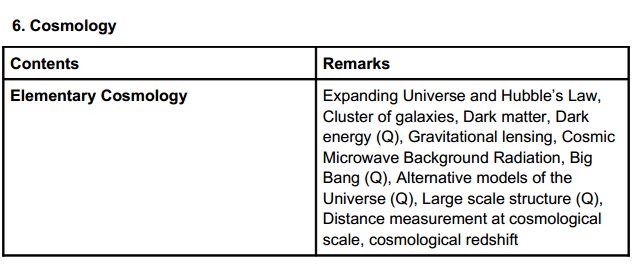
Syllabus of International Olympiad on Astronomy and Astrophysics (IOAA)
Sabtu, 01 Oktober 2011
Sabtu, 10 September 2011
Kamis, 18 Agustus 2011
Selasa, 05 April 2011
Soal Fisika UN
Soal Fisika UN
SMA:
Fisika : – Soal Latihan Fisika Paket 1
- Pembahasan Soal Latihan Fisika Paket 1
Some fundamental 'general concepts' among the most sought after topics for tutoring Physics are Physical observation, quantity, experiment, theory, unit, state and system and the force of Gravity and some 'theoretical concepts' are Particle, Physical field, Wave, Physical constant, Physical law, Physical interaction and Mass energy equivalence. Professional teachers and professors also give out tuitions at home or tutorials. To get a grip of Physics, one of the most profound primitive institutions of academics, you can opt for tutors from the best teachers you know, or even get through with suitable tutors online.
Physics is much about the nature of things in this realm we live. Perhaps, you have heard of Murphy's Law, well there is a good amount of reality behind complex systems, mathematically speaking, they more things you have running the more chances of one of them breaking. To help illustrate these points and other topics which intersect this concept; I'd like to recommend this book;
"At Home in the Universe - the search for the laws of self-organization and complexity" by Stuart Kauffman. 1995 If you are looking for a book that takes all the observations, natural laws and known science and then poses the question and looks for the ultimate answers in complexity, chaos and natural self-organization from atoms and molecules to complex bio-systems and planetary systems. The author makes some great points in the book and takes the reader into deep thought.
Work, Energy, and Power - Chapter Outline
Lesson 1: Basic Terminology and Concepts
Lesson 2: The Work-Energy Theorem
- Internal vs. External Forces
- The Work-Energy Connection
- Bar Chart Illustrations
Sources:
The Classroom Physics
Jumat, 18 Maret 2011
Soal Fisika SNMPTN

Download Links Exam Drill for SNMPTN – Physics
Kamis, 17 Februari 2011
Physics Drill for Senior High School Pack 1
I would argue that Physics by Inquiry, a three volume textbook series by Lillian McDermott and the Physics Education Group at the University of Washington, makes spectacularly successful use of a modified form of the Socratic Method.
Physics Drill for High School Final Exam - Natural Science Program
- Code A
- Download Questions, Download Solutions Code B
- Download Questions, Download Solutions
I first used Physics by Inquiry as a graduate student in a teacher education program, and I found it revelatory. It was exciting and challenging. Equations and calculations were not center stage- ideas were, and those ideas made sense. For the first time in my life, I liked physics. Physics by Inquiry is in fact written largely for pre-and in-service teachers who are furthering their own educations. It seems fairly clear that one point of the books' is to show these current and future teachers just how effective inquiry-based learning can be. It's a lesson that worked for me- I've enthusiastically taken many of the ideas in Physics by Inquiry to heart. The other target audience of these books is college students who lack a strong science background and want to learn introductory physics for any reason.
Although the physics explored in these books is fairly basic, and includes the same topics that you would expect to find in a high school physics course, including properties of matter, heat and temperature, magnets, electric circuits, light and optics, kinematics, and astronomy, the books are not really for high school students. From a purely intellectual perspective, the material would be suitable for a high school class, but it would not be practical in most classrooms because of the high level of independent work it requires from groups. For many, maybe most, high school teachers using the Physics by Inquiry curriculum in unmodified form would be a classroom management disaster. Using the ideas in the book in a modified format however, could be enormously successful.
(Although I wouldn't want to use an unmodified Physics by Inquiry curriculum in most high schools, I would certainly recommend it to a homeschool group, if they have a teacher who is knowledgeable enough to use it.)
Another practical problem with the Physics by Inquiry format is that it is relatively time-consuming. One could make a strong argument that quality of learning matters more that quantity of topics covered, but when students must take standardized exams at the end of the year, that argument begins to feel weak.
As a tutor, I try to be very mindful of the lessons I learned from these books: knowledge really is more powerful when it is created by the student and skillful questioning can lead to excellent results. Physics by Inquiry is a book that I can wholeheartedly recommend to teachers, homeschooling parents, and those curious about physics or the process of scientific inquiry.
Sumber:
http://physics-courses.blogspot.com
Disusun Ulang Oleh:
Arip Nurahman
Pendidikan Fisika, FPMIPA. Universitas Pendidikan Indonesia
&
Follower Open Course Ware at MIT-Harvard University. Cambridge. USA.
Selasa, 25 Januari 2011
Ujian Nasional Fisika

Walaupun UN mengundang pro dan kontra tapi hendaknya tetap di jalur yang semestinya, karena bagaimana pun para siswa terutama siswa SMA / MA adalah para calon Agent of Change yang akan berperan untuk membawa perubahan-perubahan konstruktif bagi negeri ini. Oleh karena itu agar keraguan berkurang di kalangan dunia kependidikan, kami dari Tim Ujian Nasional mencoba menyampaikan beberapa hal yang dipandang penting terutama dalam hal dalam kebijakan UN 2011 yang tentunya diharapkan dapat menjadi bekal bagi para siswa agar mereka cukup persiapan dalam menghadapi Ujian Nasional 2011.
Soal Fisika Ujian Nasional SMA/MA dibuat sekitar 40 (lima puluh) soal dan hanya berlaku UN SMA/MA Program IPA. Walaupun soal fisika terkenal sulit, tapi kebanyakan siswa kelas XII IPA merasa optimistis sanggup mengerjakan soal mata pelajaran fisika. Mereka merasa percaya diri untuk bisa lulus ujian nasional walau sebelumnya biasanya tertekan karena kesulitan mengerjakan soal matematika.
Tips Mengerjakan Soal Fisika UN
Sebagian besar siswa berpikir bahwa fisika adalah suatu pelajaran yang sulit yang beberapa dari mereka lebih suka menghindari daripada mencoba menguasainya. Namun, terlepas Anda suka atau tidak, Anda harus tetap dengan itu, lulus ujian salah satunya ditentukan pelajaran ini. Jadi kami ingin membantu Anda memecahkan masalah Anda yang berhubungan dengan fisika.
Pertama, sangat penting bahwa Anda selalu memperhatikan penjelasan guru di kelas. Meskipun Anda tidak menyukai hal ini, janganlah menghindar, Anda jangan berpikir bahwa Anda bisa belajar di rumah dengan mudah dengan hanya membaca teori di buku teks. Seperti yang Anda tahu bahwa fisika agak sulit dimengerti, maka perlunya penjelasan yang baik dari seorang guru fisika.
Jangan mencoba untuk menghafal hal-hal yang guru Anda katakan atau Anda membaca dari buku teks. Sebaliknya, memahami logika dan bagaimana sesuatu bekerja atau terjadi. Cobalah untuk benar-benar memahami masalah ini, terutama pada kegiatan percobaan.
Hal lain yang dapat Anda lakukan adalah membuat kelompok studi. Lebih baik bagi Anda untuk membentuk di awal semester yang akan mudah saat Anda berhubungan dengan kegiatan laboratorium yang melibatkan teman atau kelmpok. Atur jadwal, termasuk tempat dan waktu untuk pertemuan rutin. Belajar dengan kelompok bermanfaat. Jika Anda memiliki kesulitan, Anda dapat berbagi dengan teman-teman Anda. Mereka mungkin memiliki jawaban dan memberikan penjelasan yang jelas.
Juga, fisika belajar di kelompok memaksa Anda untuk mempelajari masalah ini lebih serius karena Anda harus berbagi pengetahuan dengan anggota lain. Anda tidak ingin menjadi satu-satunya yang bersifat pasif dalam kelompok, selalu mendengarkan penjelasan teman-teman Anda ‘, bukan? Dalam hal ini, Anda bisa berlatih mengajar fisika, khususnya bagi mereka yang tidak memahami hal itu.
Nah ketika tiba ke ujian, Anda mungkin akan bingung dengan kalimat awal dalam pertanyaan-pertanyaan yang akan membuat Anda putus asa sebelum anda mulai menjawab mereka. Jadi kami ingin menyarankan Anda untuk membaca semua pertanyaan ujian. Apakah yang paling mudah. Cobalah untuk membaca setiap pertanyaan dengan lengkap dan mencernanya perlahan, tetapi pasti.
Satu hal lagi, jangan melihat jam saat Anda karena Anda bisa gugup. Itu adalah tips untuk sukses dalam ujian fisika. Kami berharap bahwa itu berguna untuk Anda.
Sumber:
Ujian Nasional Org.
Kamis, 06 Januari 2011
Hasil Pertemuan Internasional Summit (Ikatan Ilmuwan Indonesia Internasional) REKOMENDASI KELOMPOK PENDIDIKAN

Secara prinsip pendidikan di Indonesia harus dilihat sebagai upaya merancang dan melakukantransformasi masa depan untuk menjawab tantangan yang lebih besar dan kompleks denganmemanfaatkan sumber daya yang ada saat ini. Pendidikan memerlukan titik keseimbangan dalam otoritas penyelenggaraan antara negara, komunitas dan keluarga yang sangat dipengaruhi oleh dinamika perubahan akibat tantangan di atas.
Cluster pendidikan merekomendasikan agar:
1. Pemerintah dan semua pihak terkait secara segera dan sungguh-sungguh mengerahkan segala daya dan upaya untuk meningkatkan kualitas dan kemampuan guru demi terciptanya sebuah profesi yang bermartabat dan otonom, baik secara strategis maupun teknis.
Profesionalisme guru perlu dikembangkan berdasarkan kompetensi yang didukung oleh pendidikan, pengembangan diri, dan tanggung jawab profesi yang bersifat kolegial. Ilmuwan dapat berkontribusi dalam merancang model pendidikan profesional ini.
2. Dalam konteks ini, cluster pendidikan menggarisbawahi makna pendidikan sebagai upaya untuk menginsiprasi, memotivasi, dan membangkitkan kegairahan belajar selain meningkatkan kecerdasan intelektual. Guru memerlukan kemampuan mendidik yang menekankan pendekatan dari hati ke hati.
Pendidikan pada umumnya, dan guru pada khususnya, perlu berpedoman pada prinsip bahwa semua anak Indonesia mempunyai kemampuan dan potensi yang setara untuk mengembangkan diri sesuai dengan aspirasinya sehingga pendidik dituntut untuk kreatif dan memberdayakan seluruh kemampuan dan potensi tersebut.
3. Pendidikan etika dan budi pekerti diperlukan sebagai bagian dari pembangunan karakter bangsa, baik melalui sekolah, keluarga maupun masyarakat. Etika dan budi pekerti ini sendiri merupakan kesepakatan masyarakat yang terdapat dalam UUD 45 dan Pancasila. Pendidikan juga harus ditujukan untuk menghasilkan manusia Indonesia yang berani melakukan transformasi sosial selain memiliki kecerdasan akademik, berakhlak dan terampil.
4. Pemerataan pendidikan baik dalam hal akses dan kualitas didukung oleh infrastruktur yang dirancang untuk pendidikan berkelanjutan dengan kebijakan jangka panjang untuk memastikan bahwa semua anak Indonesia berhak memperoleh pendidikan. Termasuk dalam hal ini adalah penyediaan pendidikan dan pelatihan vokasi sebagai alternatif bagi pendidikan akademik sekaligus anjuran bagi anak didik dan anggota masyarakat yang bermaksud mengembangkan keahlian profesionalnya.
Teknologi dapat dimanfaatkan untuk sarana belajar jarak jauh maupun sebagai prasarana peningkatan kualitas kurikulum yang menggabungkan kearifan lokal dan pendekatan dari bawah. Teknologi dapat pula digunakan untuk peningkatan dan pemerataan dalam akses ke sumber daya belajar dan sumber pengetahuan.
5. Akhirnya, tak kalah pentingnya, cluster pendidikan menggarisbawahi kenyataan bahwa pendidikan menuntut kemitraan dan tanggung jawab semua pemangku kepentingan, termasuk orangtua, komunitas dan masyarakat luas. Pendidikan dapat dijadikan sebuah gerakan sosial yang tanggungjawabnya tak hanya terletak di pundak Pemerintah, tetapi juga keluarga, komunitas, dan semua elemen masyarakat lainnya.
Sumber:
Rabu, 08 Desember 2010
Termodinamika

7.6 Summary and Conclusions
- Entropy as defined from a microscopic point of view is a measure of randomness in a system.
- The entropy is related to the probabilities
of the individual quantum states of the system by
where, the Boltzmann constant, is given by
.
- For a system in which there are
quantum states, all of which are equally probable (for which the probability is
), the entropy is given by
The more quantum states, the more the randomness and uncertainty that a system is in a particular quantum state. - From the statistical point of view there is a finite, but exceedingly small possibility that a system that is well mixed could suddenly ``unmix'' and that all the air molecules in the room could suddenly come to the front half of the room. The unlikelihood of this is well described by Denbigh [Principles of Chemical Equilibrium, 1981] in a discussion of the behavior of an isolated system:
``In the case of systems containing an appreciable number of atoms, it becomes increasingly improbable that we shall ever observe the system in a non-uniform condition. For example, it is calculated that the probability of a relative change of density,
, of only
in
of air is smaller than
and would not be observed in trillions of years. Thus, according to the statistical interpretation the discovery of an appreciable and spontaneous decrease in the entropy of an isolated system, if it is separated into two parts, is not impossible, but exceedingly improbable. We repeat, however, that it is an absolute impossibility to know when it will take place.''
- The definition of entropy in the form
arises in other aerospace fields, notably that of information theory. In this context, the constant
is taken as unity and the entropy becomes a dimensionless measure of the uncertainty represented by a particular message. There is no underlying physical connection with thermodynamic entropy, but the underlying uncertainty concepts are the same.
- The presentation of entropy in this subject is focused on the connection to macroscopic variables and behavior. These involve the definition of entropy given in Chapter 5 of the notes and the physical link with lost work, neither of which makes any mention of molecular (microscopic) behavior. The approach in other sections of the notes is only connected to these macroscopic processes and does not rely at all upon the microscopic viewpoint. Exposure to the statistical definition of entropy, however, is helpful as another way not only to answer the question of ``What is entropy?'' but also to see the depth of this fundamental concept and the connection with other areas of technology.
Disusun Ulang Oleh;
Arip Nurahman
Pendidikan Fisika, FPMIPA. Universitas Pendidikan Indonesia
&
Follower Open Course Ware at MIT-Harvard University, Cambridge. USA.
Semoga Bermanfaat dan Terima Kasih
Materi kuliah termodinamika ini disusun dari hasil perkuliahan di departemen fisika FPMIPA Universitas Pendidikan Indonesia dengan Dosen:
1. Bpk. Drs. Saeful Karim, M.Si.
2. Bpk. Insan Arif Hidayat, S.Pd., M.Si.
Dan dengan sumber bahan bacaan lebih lanjut dari :
Massachusetts Institute of Technology, Thermodynamics
Professor Z. S. Spakovszk, Ph.D.
Office: 31-265
Phone: 617-253-2196
Email: zolti@mit.edu
Aero-Astro Web: http://mit.edu/aeroastro/people/spakovszky
Gas Turbine Laboratory: home
Ucapan Terima Kasih:Kepada Para Dosen di MIT dan Dosen Fisika FPMIPA Universitas Pendidikan Indonesia
Semoga Bermanfaat
Selasa, 07 Desember 2010
Termodinamika
Reynolds and Perkins give a numerical example which illustrates the above concepts and also the tendency of a closed isolated system to tend to equilibrium. The starting point is a system in an initial microscopic state that is not an equilibrium distribution. We expect the system will change quantum state, with disorder, randomness growing until they reach the equilibrium values. The specific system to be studied is composed of 10 particles ,
,
, ...,
, each of which can exist in one of 5 states, of energies 0, 1, 2, 3, 4. The system is isolated and has a total energy of 30. The total energy remains unchanged during the evolution of the microscopic states. Some of the allowed states are shown in Figure 7.1
For ten particles, 4 energy states, and a total energy of 30, there are 72,403 possible quantum states (4 states are indicated in Figure 7.1). However, there are only 23 possible distributions in terms of the number of particles having a given energy as shown in Figure 7.2. For example, states 2 and 3 in Figure 7.1 are two different quantum states, but they represent the same group (22) in Figure 7.2. The allowed state groups
If the quantum-state probabilities are equal, each quantum state has a probability of 1/72,403. The probabilities of each group are thus directly proportional to the number of quantum states in this group. For instance, group 22 has 90 quantum states, so its probability is . We now know what the equilibrium distribution of probabilities is. We now address the time evolution of a system to the equilibrium state. To see this, we start a system from one of the 22 non-equilibrium groups and track the behavior over time. A way to examine the process is to consider what happens if two particles interact, doing this numerically for the instantaneous quantum state. The two particles are free to change energy as long as the total energy of the system is conserved. This may or may not end up by changing the state group (the particles could interact and only switch states). There are 45 possible pairs for this interaction (there are
possible ways to carry out the interaction, but two of them, say interactions between
and
and
and
, are the same), and we assume that any of them is equally likely to happen.
If the system is initially in state 1 of Figure 7.1, it is in group 23 of Figure 7.2. For each of the 45 pairs, there are two interactions that take the system to group 22, and one that leaves the system unchanged. (For interactions between and
, say, the result can be that
and
have their energy unchanged, that
loses energy and
gains energy, or that
gains energy and
loses energy. In the first of these, the system will remain in group 23. In the second and third it will move to group 22.) Hence the transition probability from group 23 to group 22 is
, and the transition probability from 23 to 23 is
.
For the other groups, the transitions are more complicated, but can be found numerically, with the results shown in Figure 7.3. The numerical experiments were carried out with the system initially in state 23 and with successive interactions chosen randomly in accordance with the transition probabilities of Figure 7.3. The experiment was repeated 10,000 times, with a different group history traced out each time and, again, the system energy maintained at 30. The fraction of the experiments in which each group occurred at time was used to calculate the group probabilities
at each time. The entropy was then found for the distribution
at that time.
Figure 7.4 shows the evolution of some of the with time (the unit of time is the interaction number for the calculations) starting from group 23. After roughly ten interactions, the probabilities have reached a steady-state level, which are the equilibrium probabilities from Figure 7.2.
The computed entropy is given in Figure 7.5 as a function of time. It increases to the equilibrium value with the same sort of behavior as the probability distribution.
The interactions allow the system to change groups. The transition probabilities are large for groups with high equilibrium probabilities.
There is one additional aspect of the behavior that is brought out in the text. This is the difference in overall probabilities between the order of transitions. The probability of a transition sequence is the product of the individual step transition probabilities. The transition 23-22-12-9-1 thus has the probability: . The reverse transition, 1-9-12-22-23 has the probability:
. There is an enormous probability that the system will move towards (and persist in) quantum state groups that have high equilibrium probabilities. Once a system has moved out of group 23, there is little likelihood that it will ever return. Further, for engineering systems, which have not 10 particles, but upwards of
, the difference between transitions and their reverses are much more marked, and the probability is overwhelming that the distribution will be a quantum state with a broad distribution of particle energies.
Disusun Ulang Oleh:
Arip Nurahman
Pendidikan Fisika, FPMIPA. Universitas Pendidikan Indonesia
&
Follower Open Course Ware at MIT-Harvard University. Cambridge. USA.
Materi kuliah termodinamika ini disusun dari hasil perkuliahan di departemen fisika FPMIPA Universitas Pendidikan Indonesia dengan Dosen:
1. Bpk. Drs. Saeful Karim, M.Si.
2. Bpk. Insan Arif Hidayat, S.Pd., M.Si.
Dan dengan sumber bahan bacaan lebih lanjut dari :
Massachusetts Institute of Technology, Thermodynamics
Professor Z. S. Spakovszk, Ph.D.
Office: 31-265
Phone: 617-253-2196
Email: zolti@mit.edu
Aero-Astro Web: http://mit.edu/aeroastro/people/spakovszky
Gas Turbine Laboratory: home
Ucapan Terima Kasih:Kepada Para Dosen di MIT dan Dosen Fisika FPMIPA Universitas Pendidikan Indonesia
Semoga Bermanfaat